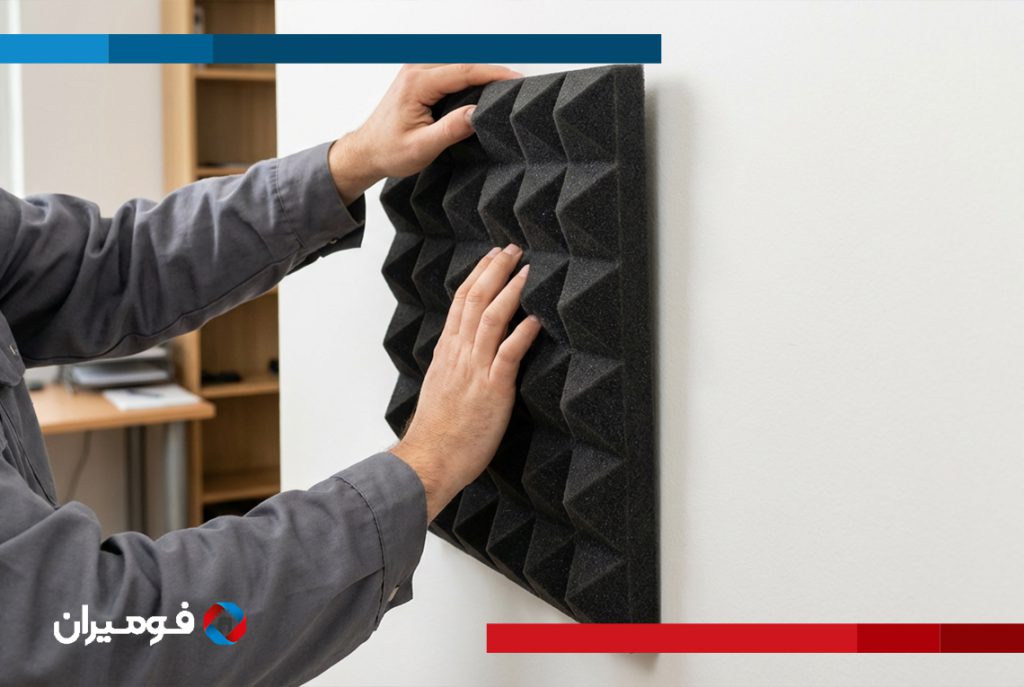
If you have just entered the fascinating world of content creation or are an experienced YouTuber, you definitely know that competition in this space is getting tougher day by day. Perhaps the first thought that comes to mind for improving video quality is buying an expensive camera or cinematic lenses. But wait! There is a big secret in the YouTube world that professionals rarely talk about. That secret is the “Magic of Sound”. Today in the specialized Foamiran blog, as one of the pioneers in the production of industrial foams and engineering foams in Iran, we intend to close the case on home studio equipment forever. We are not just talking about buying a product here; rather, we want to fully review the technical and engineering knowledge behind acoustic foams so that you can make the best choice.
Why is video sound more important than its image?
This sentence might seem a bit strange. Isn’t YouTube a video platform? Yes, it is, but audience psychology says otherwise. Global research and statistics have shown that YouTube users will watch a video with average image quality (e.g., 720p) but clear, distinct, and noise-free sound until the end. Conversely, if your video has 4K image quality but the sound has noise, Echo, Reverb, or static, the user will close the video in less than 10 seconds.
Impact of sound quality on audience retention on YouTube
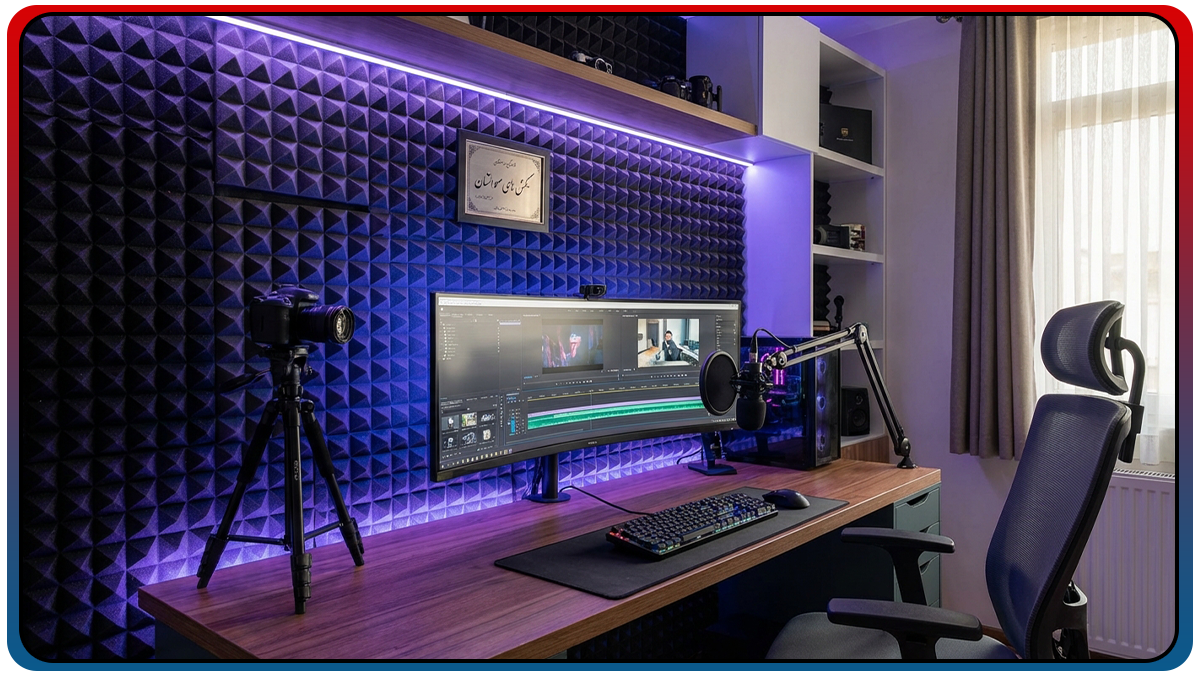
In YouTube algorithms, there is a vital factor called Audience Retention which determines the growth of your channel. If your voice echoes in the environment and is ear-piercing, the audience’s brain quickly suffers from “listening fatigue”. This fatigue causes the user to subconsciously feel bad about the content and hit the exit button. Therefore, investing in acoustic foam and correcting the room’s sound is a direct investment in your channel’s growth and revenue, not merely an extra cost.
Common audio problems in non-standard rooms (Echo and Reverb)
Most of us record our videos in a bedroom or a regular office. These rooms are full of flat, hard surfaces; walls, ceilings, ceramic floors, and closets. When you speak, sound waves exit your mouth, hit these hard surfaces, and bounce back towards the microphone.
This back-and-forth of sound causes two destructive phenomena:
Echo: Distinct repetition of sound with a time delay (like when you shout in the mountains).
Reverb: The prolongation of sound which causes your words to be heard unclearly and gives a “bathroom” or “cave” feel to the video.
What is acoustic foam and how does it work?
To solve these problems, we need a material that changes the behavior of sound. This is where Foamiran’s specialized knowledge enters the field.
❓ What is the difference between Sound Insulation and Sound Absorption?
Many people confuse these two engineering concepts and buy the wrong product. Let’s clarify this once and for all:
1. Sound Insulation (Isolation): The goal of insulation is to prevent the “passage” of sound. Meaning you don’t want neighbors to hear your gameplay shouting, or street car horns to enter the microphone. For this, you need heavy and dense materials (like rock wool or dense EVA foam) which are usually installed inside the wall.
2. Sound Absorption: The goal of absorption is to prevent “reflection and echoing” of sound inside the room. When you speak in an empty room and the sound echoes, you have a sound absorption problem. Foamiran acoustic panels do exactly this; they do not allow sound waves to hit hard walls and return to the microphone. For YouTubers, the first priority is always “Sound Absorption”.
Technical features of acoustic foams and mechanism of action
To solve Echo (distinct repetition of sound) and Reverb (prolongation of sound) problems, we need a material that changes the physical behavior of sound. Standard acoustic foams usually have an “Open Cell” engineering structure. The mechanism of action is as follows: when a sound wave enters this foam, it enters the elements and tiny, interconnected cavities of the foam. As a result of the collision and friction of air molecules with the internal walls of the foam, the mechanical energy of sound (kinetic) is converted into thermal energy, and the sound is practically “eaten”. The density of the foam is very important in this process; if the foam is too light, sound passes through it, and if it is too hard and closed, sound reflects. The main types of foams available in the market are:
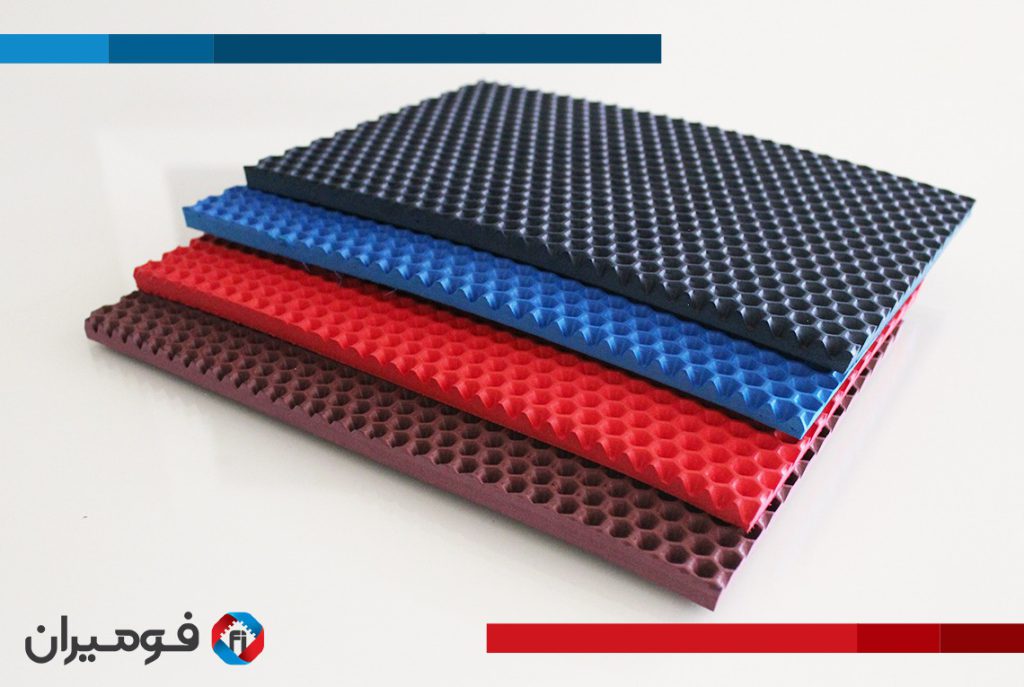
Egg Crate Foam (Egg Crate)
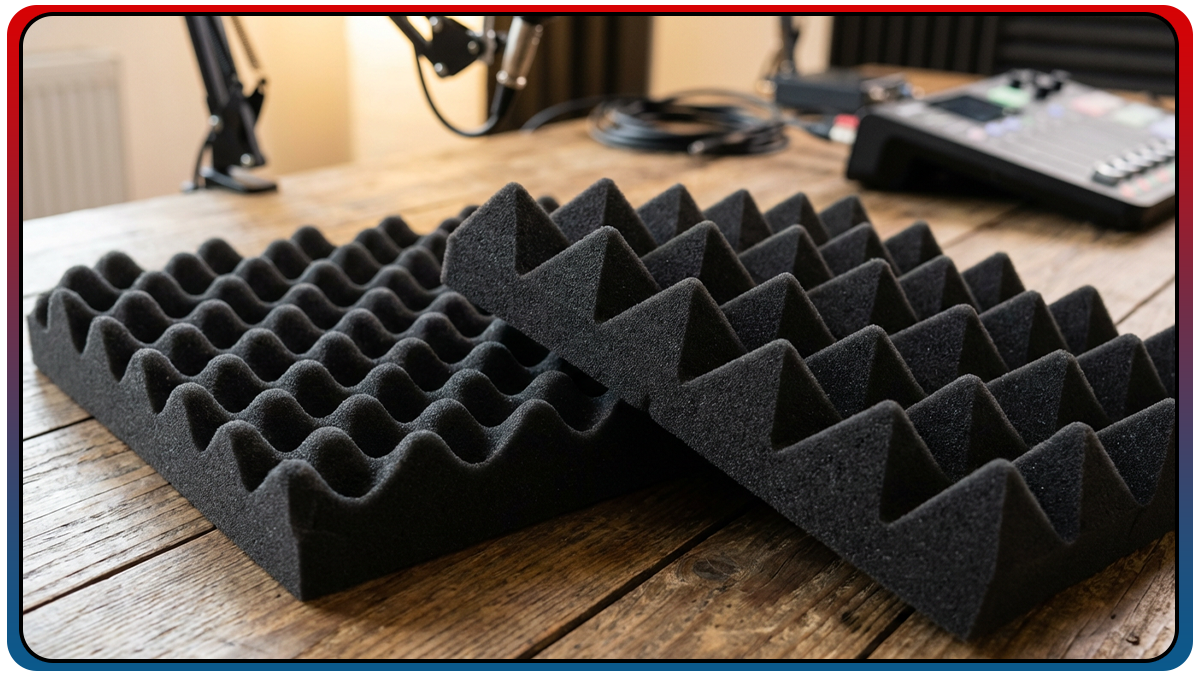
The most popular and well-known option for starting out, whose surface resembles an egg crate. These bumps and indentations increase the foam’s contact surface with air and change the angle of sound impact so direct reflection doesn’t occur. This model works excellently for absorbing High and Mid-range frequencies and, relative to its high efficiency, has a very reasonable and economical price, making it ideal for starting a YouTube career.
Pyramid Foam (Pyramid Foam)
It performs very similarly to the egg crate foam but its appearance is more geometric, regular, and stylish. The sharp tips of the pyramids cause better breaking of sound waves, but there isn’t a huge functional difference compared to the egg crate model. If the modern look of the studio and visual aesthetics in the camera frame (background) are important to you, pyramid foam is considered a better option.
Bass Trap Panels (Bass Trap)
Many YouTubers complain about the room sound “humming”. This problem is due to the accumulation of low frequencies (bass) and high energy in the corners of the room. Ordinary thin foams cannot control these strong frequencies. For this task, you must use bass traps, which have higher density and thickness, exactly in the corners of the walls (tri-corners) to remove the room’s “boom” sound.
In addition to the above, there are panels called Diffusers which are usually made of wood or hard compressed polystyrene. The job of a diffuser is not to absorb sound, but to “scatter” sound in different directions so that the space remains alive and the sound doesn’t become overly muffled. Using diffusers is usually applicable in professional music studios but can also be useful for YouTubing.
Sound absorption mechanism in open cell foams
Acoustic foams usually have an “open cell” structure. When a sound wave enters this foam, it enters the tiny, interconnected cavities of the foam. Due to the friction of air molecules with the foam walls, sound energy (which is mechanical energy) is converted into thermal energy (although the amount of this heat is negligible). In this way, the sound is “eaten” and does not return to the microphone. This technology requires precise foam production with a specific density, which is done at the Foamiran factory with advanced machines.
Which Foamiran foams are suitable for acoustics?
Foamiran factory, as a mother manufacturer, produces a wide range of foams which, in addition to bag and shoe or automotive industries, have specialized applications in the construction and acoustic industry that you might be unaware of:
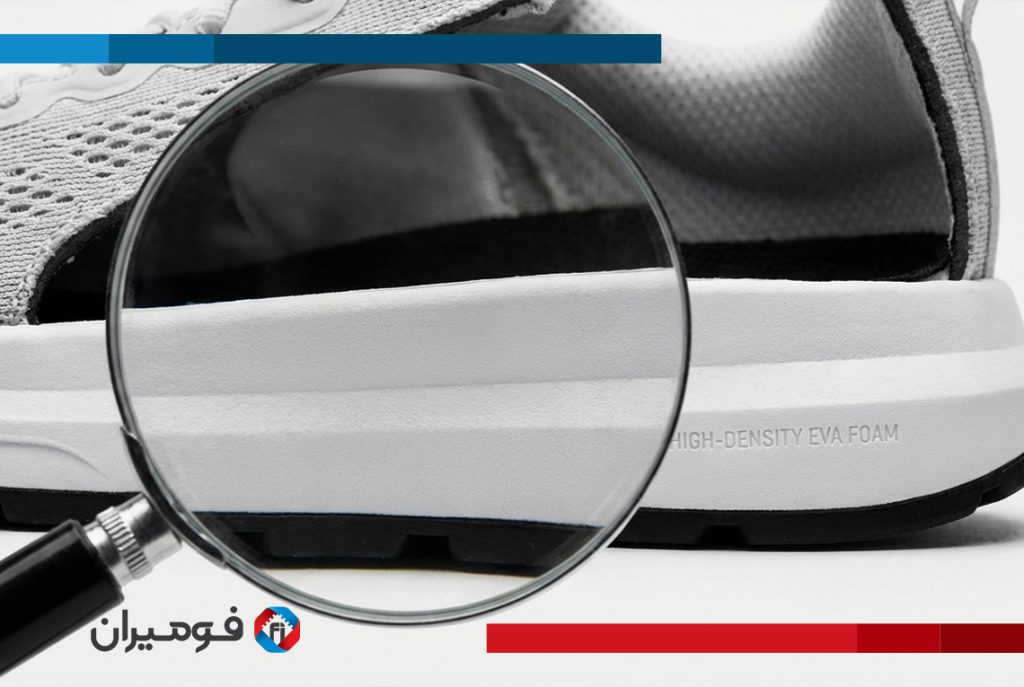
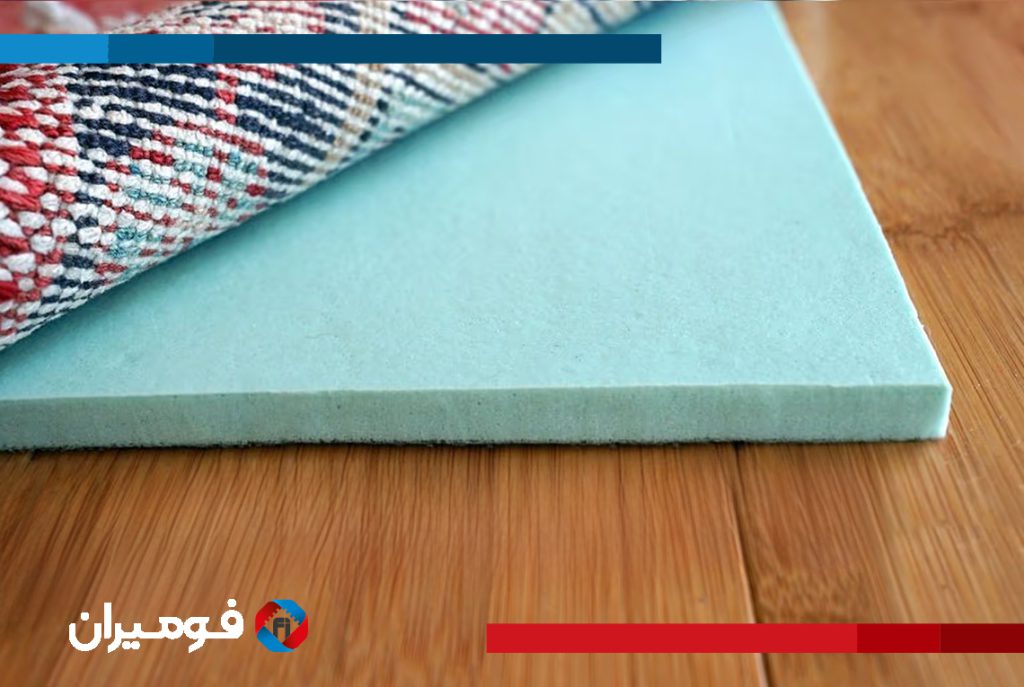
- •Polyethylene and EVA Foam for Underlayment (Isolator): These foams have a closed-cell structure and are the best option for Soundproofing and vibration damping. If you have a thin wall, using a layer of Foamiran EVA foam under acoustic panels or using it as a vibration damper under microphone stands and monitoring speakers eliminates low-frequency noises and vibrations.
- •EPDM Elastic Foams for Sealing: Sound acts like water and passes through the smallest crack. Foamiran EPDM foam strips, which have high resistance to weathering and sunlight, are excellent for insulating around studio doors and windows and largely prevent street noise from entering the studio.
- •Product Combination (Sandwich Panel): A professional studio works in combination. Using Foamiran industrial foams for underlayment (for isolation and preventing sound passage) and installing open-cell acoustic foams (like egg crate) over it to remove reverb makes your studio acoustically flawless.
Comparison table of acoustic panel types
To help you decide more easily, Foamiran technical experts have prepared this comparison table based on price, efficiency, and aesthetics:
Golden installation spots and common mistakes (Do’s and Don’ts)
Suppose you bought the best foam on the market. Now where should you install it? Should you cover the whole room? Definitely not! Covering the whole room (Dead Room) causes the sound to become severely “muffled” and unnatural, and the video loses its lively feel. Here we review vital installation tips and dangerous mistakes:
Correct Foam Installation Tips (Do’s)
- ✔ Mirror Trick: To find the best installation spot, sit on your chair and ask a friend to move a mirror along the side wall. Wherever you see the image of the speakers or your own mouth in the mirror, that is the “primary reflection” point and foam must be installed there.
- ✔ Easy and Clean Installation Method: Acoustic foams are light. To prevent damage to the wall paint, instead of heavy industrial adhesives, use double-sided cellulose tape, pins (for plaster walls), or a small amount of silicone glue (size of a coin in the corners).
- ✔ Special Attention to Corners: Room corners are places where high energy and annoying bass accumulate, causing the sound to go boom-boom. Make sure to use bass traps in the corners to multiply sound clarity.
Common and Dangerous Mistakes (Don’ts)
- ✖ Using Cardboard Egg Trays: This is the biggest mistake! Cardboard egg cartons have no effect on acoustics, look ugly, attract cockroaches and insects, and most importantly, are highly flammable and dangerous. Never jeopardize your safety with this action.
- ✖ Buying Low Density Foam: Very soft, hollow, and cheap market foams effectively have no use for sound absorption and are only decorative. Foam density must be standard and engineered to be able to dissipate sound energy within itself.
Frequently Asked Questions by YouTubers about acoustics and foam
1. Can I use carpet or thick curtains instead of foam?
To some extent yes, but their efficiency is not comparable to acoustic foam. Carpets and curtains only absorb very high frequencies slightly, but they don’t have much effect on mid and bass frequencies which are the main part of the human voice, and your voice will still be recorded “nasal” or with reverb.
2. How much foam do I need for a regular 12-meter room?
As mentioned, you shouldn’t cover the entire room. Usually, covering 20 to 30 percent of the main wall surfaces (front wall, behind, and corners) is enough to achieve excellent and standard sound for YouTube.
3. Are acoustic foams allergenic and dangerous?
No. Unlike materials like glass wool or rock wool which release tiny suspended particles in the air and are dangerous to breathe in an enclosed space, standard acoustic polyurethane foams are completely hygienic, lint-free, and anti-allergenic, and are completely safe for use in a bedroom or home studio.