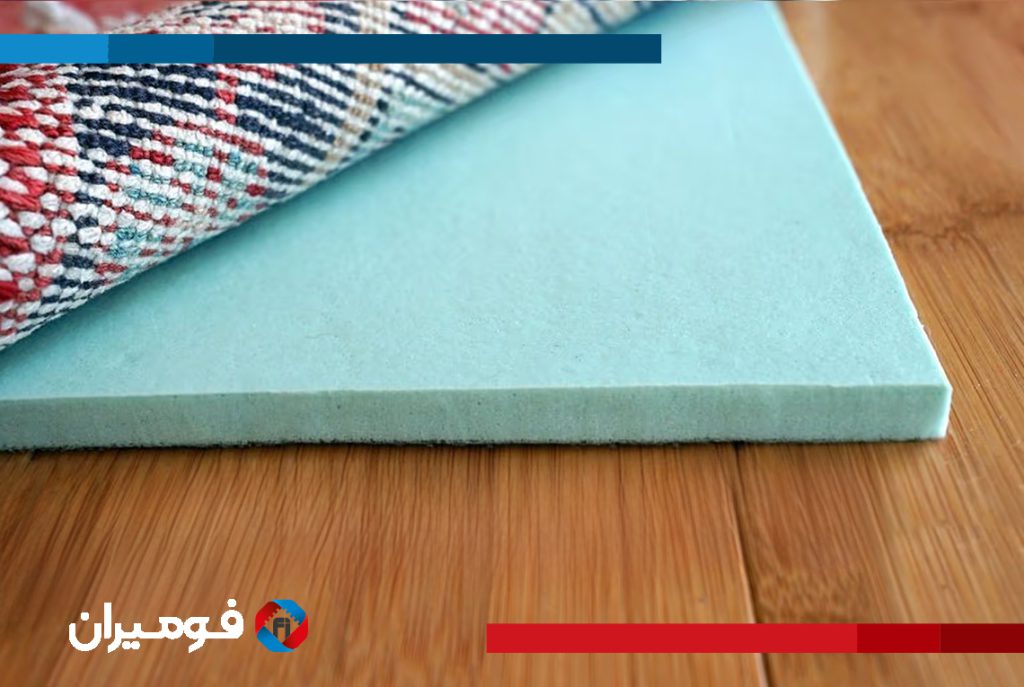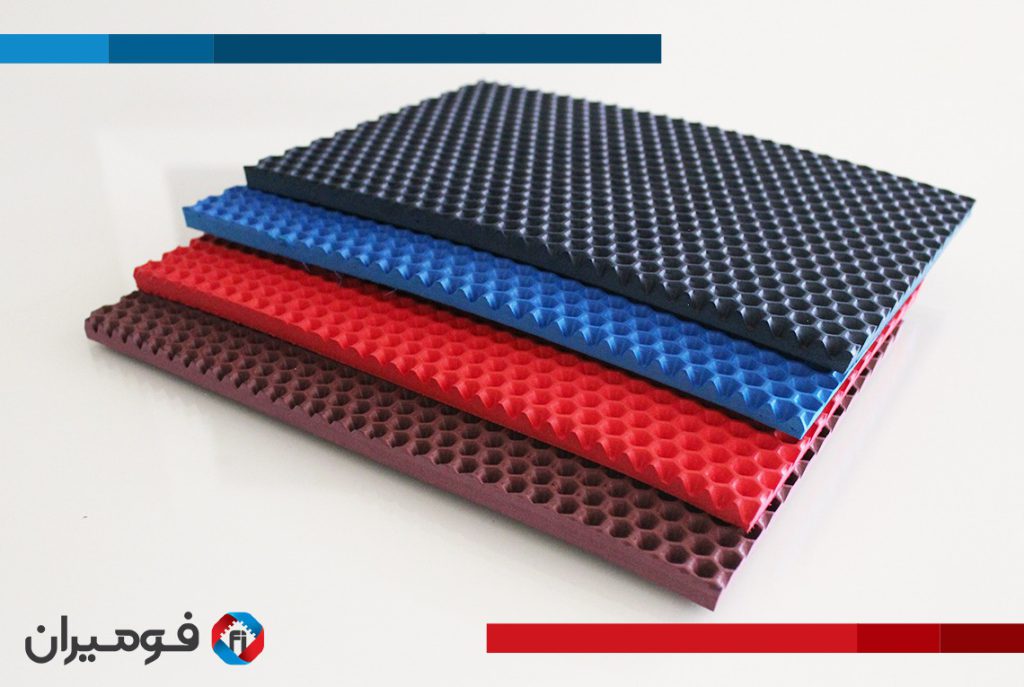
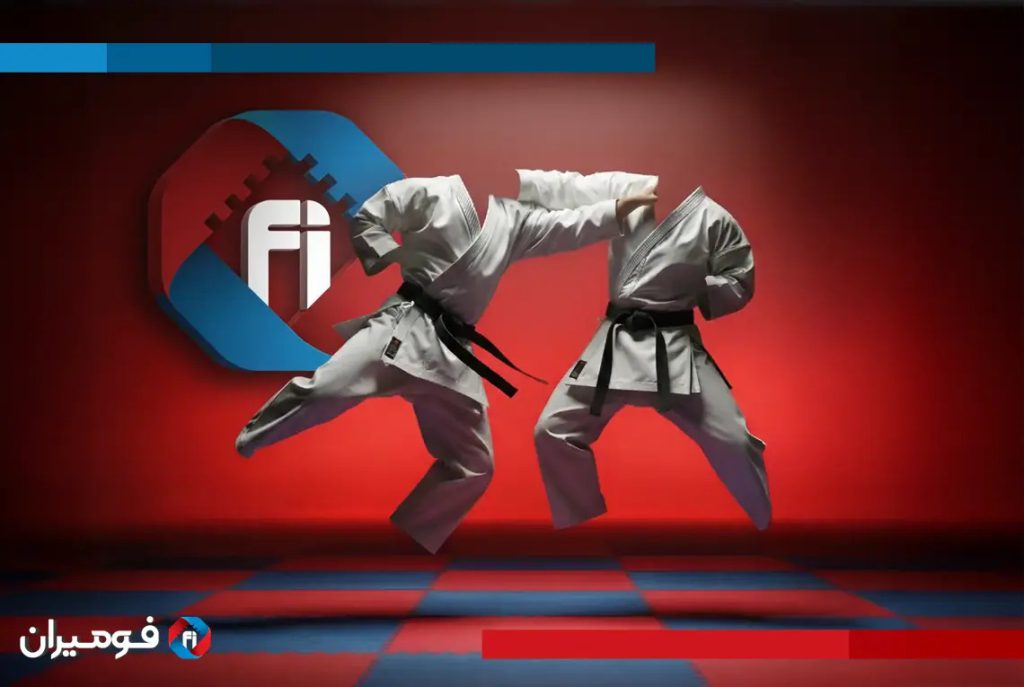
Safety and efficiency in sports training, especially in martial arts and high-intensity activities, are of paramount importance. One of the key pieces of equipment that plays a direct role in the quality of training and injury prevention is gym tatami flooring. These floorings are produced from closed-cell EVA foam and, due to their shock-absorbing properties, anti-slip nature, and high durability, are considered the primary choice for sports halls, martial arts clubs, and fitness centers. Foamiran, as one of the largest producers of EVA foam in Iran and the Middle East, offers a variety of tatami floorings in diverse dimensions and colors in accordance with global standards.
Why is Gym Tatami important?
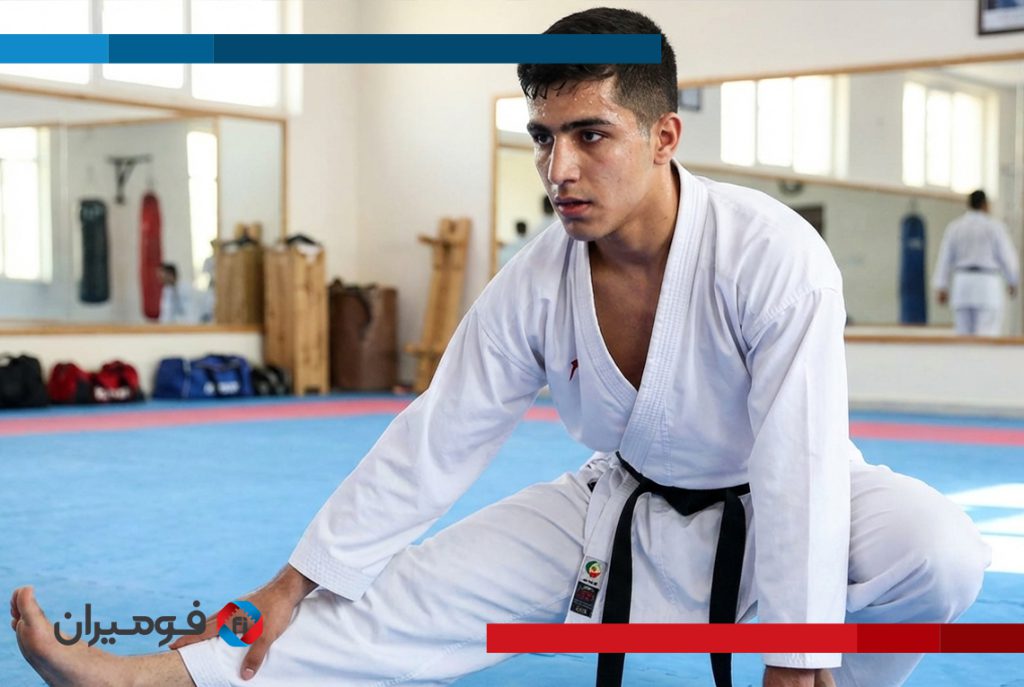
Gym tatami plays a very important role in maintaining the safety and quality of sports training. With its soft and flexible foam structure, this flooring significantly reduces the risk of injury to joints, knees, and the head during heavy workouts and throwing movements. Its standard and uniform surface is designed for various martial arts such as Taekwondo, Karate, Judo, Muay Thai, and even light bodybuilding exercises to maintain the athlete’s balance and minimize the pressure on the body. The anti-abrasion texture and controlled friction of the tatami prevent sudden slips, and this feature increases the concentration and self-confidence of athletes during training. Overall, using standard gym tatami provides a safe, professional, and secure environment for training, which plays a direct role in improving performance and preventing injuries.
What material is Gym Tatami made of?
Most gym tatamis are made from EVA (Ethylene Vinyl Acetate) foam. The closed-cell structure of EVA provides the following features:
- High shock absorption to reduce injuries from falls or impacts (up to about 70% energy absorption)
- Waterproof and non-absorbent of moisture
- Flexibility and quick rebound even after prolonged use
- Resistance to abrasion and tearing
- Lightweight and easy to transport (each tile usually weighs about 1.5 to 2.5 kilograms)
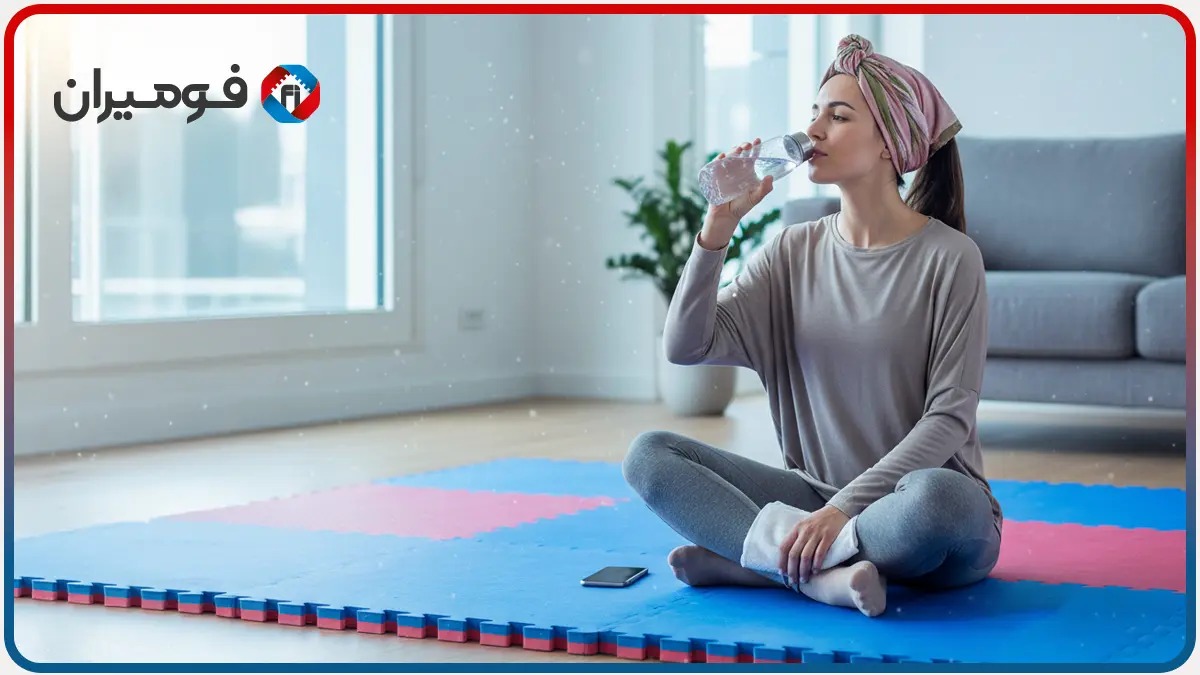
Key Features of Gym Tatami Flooring
- Diverse Dimensions and Thicknesses: From 2 cm for light exercises to 5 cm for professional martial arts disciplines.
- Puzzle Design: Quick and adhesive-free installation; 10 square meters in less than 30 minutes.
- Variety of Colors: Red, blue, black, green, and combinations for gym space arrangement.
- Washable and Disinfectable: Without moisture penetrating the inner layers.
- High Durability: Typically 5 to 8 years with proper maintenance.
Advantages of Using Foamiran Tatami
Foamiran, with over two decades of brilliant history, is recognized as the first and largest producer of EVA foam in the Middle East. The company began its operations in 2002 with the goal of producing high-quality foam products in accordance with global standards and is now a reputable name in the foam industry in Iran and various countries, including Russia, Ukraine, and other Eastern European nations. By leveraging modern technology, specialized personnel, and obtaining international certifications such as ISO 9001, ISO 14001, and ISO 45001, Foamiran has been able to supply the market with durable, safe, and eco-friendly products. Foamiran’s tatami, as one of the brand’s flagship products, is the result of this experience and global quality, designed for sports and educational environments.
- Production from premium-grade EVA foam with up-to-date quality standards.
- High resistance to deformation and long-term compression.
- Suitable for martial arts clubs, multipurpose halls, kindergartens, and even home spaces.
- Option to order in custom dimensions and colors (up to approximately 120×120 cm).
- Color variety in over 10 popular and custom colors.
What is the best tatami flooring for a martial arts club?
To choose the best tatami flooring for a martial arts club, consider parameters such as thickness, density, surface texture, and friction coefficient. For Karate and Taekwondo, a thickness of 2.5 to 3 cm is recommended, while for Judo and wrestling, a thickness of 4 to 5 cm is suggested. A friction coefficient of about 0.7 to 0.8 prevents slipping during rotational and jumping movements.
Comparison of Tatami with Conventional Floorings
| Feature | EVA Tatami | Rubber Flooring/Carpet |
|---|---|---|
| Shock Absorption | Very high (up to 70%) | Moderate |
| Water Resistance | Yes | No |
| Installation & Mobility | Easy (puzzle‑type) | Difficult |
| Joint Safety | Excellent | Weak |
| Durability | 5 – 8 years | 2 – 3 years |
Important Points for Purchasing Gym Tatami
When purchasing gym tatami, paying attention to its technical specifications is very important, as the right choice directly affects the safety and quality of training. The foam thickness should be selected according to the type of sports activity; typically, a thickness of 2.5 to 3 cm is ideal for disciplines like Taekwondo and Karate, while for Judo, wrestling, and high-impact training, a thickness of 4 to 5 cm is recommended for greater shock absorption. The density of the foam also plays a key role in the durability and resistance of the flooring, and for professional tatamis, it should be in the range of 90 to 120 kilograms per cubic meter to have both sufficient flexibility and not deform under pressure. Furthermore, an anti-slip surface with a friction coefficient of about 0.7 to 0.8 prevents athletes from slipping and ensures the safety of fast movements. Another point is the weight and portability of the tiles; lighter tatamis are easier to install and move, making them an ideal option for gyms that frequently change their flooring layout.
How to Install and Maintain Tatami?
- Install on a flat, dry surface (concrete or tile).
- Arrange in a puzzle layout and interlock the edges.
- Clean with a cotton mop and water; dry completely after washing to prevent slipperiness.
- Avoid acidic detergents (like muriatic acid).
Karate Tatami and Federation Tatami; Compliant with Standards
For disciplines like Karate, Taekwondo, and Judo, using federation-approved tatami with standard thickness and density is essential. In official competitions, a thickness of 2.5 to 3 cm for Karate and 4 to 5 cm for Judo is common. Standard tatami must be produced from EVA with a minimum density of 90 kg/m³ to have both sufficient elasticity and not deform.
What factors does the price per square meter of martial arts tatami depend on?
When examining the price per square meter of martial arts tatami, consider the thickness, density, tile size (e.g., 100×100 or 120×120 cm), surface type, and shipping cost. Buying directly from the manufacturer eliminates intermediary costs and provides the option to order custom colors and dimensions.
Buying Tatami from the Factory with Precise Technical Specifications
EVA floorings are offered with a puzzle design and a thickness of 2 to 5 cm, and each tile typically weighs 1.5 to 2.5 kilograms; this simplifies transportation and installation (less than 30 minutes for 10 square meters). For larger spaces, buying directly from the factory not only reduces costs but also allows for ordering in 120×120 dimensions and custom colors.
Frequently Asked Questions
How long does gym tatami last?
What is the best thickness for martial arts tatami?
Is tatami suitable for bodybuilding exercises?
Is it possible to order custom colors and dimensions?
Gym tatami, with its high shock absorption, anti-slip surface, suitable durability, and quick puzzle installation, is a professional option for clubs and sports halls. For a precise selection of thickness and density appropriate for your sports discipline, use expert consultation.