
Gym Rubber Flooring; Safe and Durable

  1. Home
  2. Blog
  3. Gym Rubber Flooring; Safe and Durable
Gym Rubber Flooring; Safe and Durable

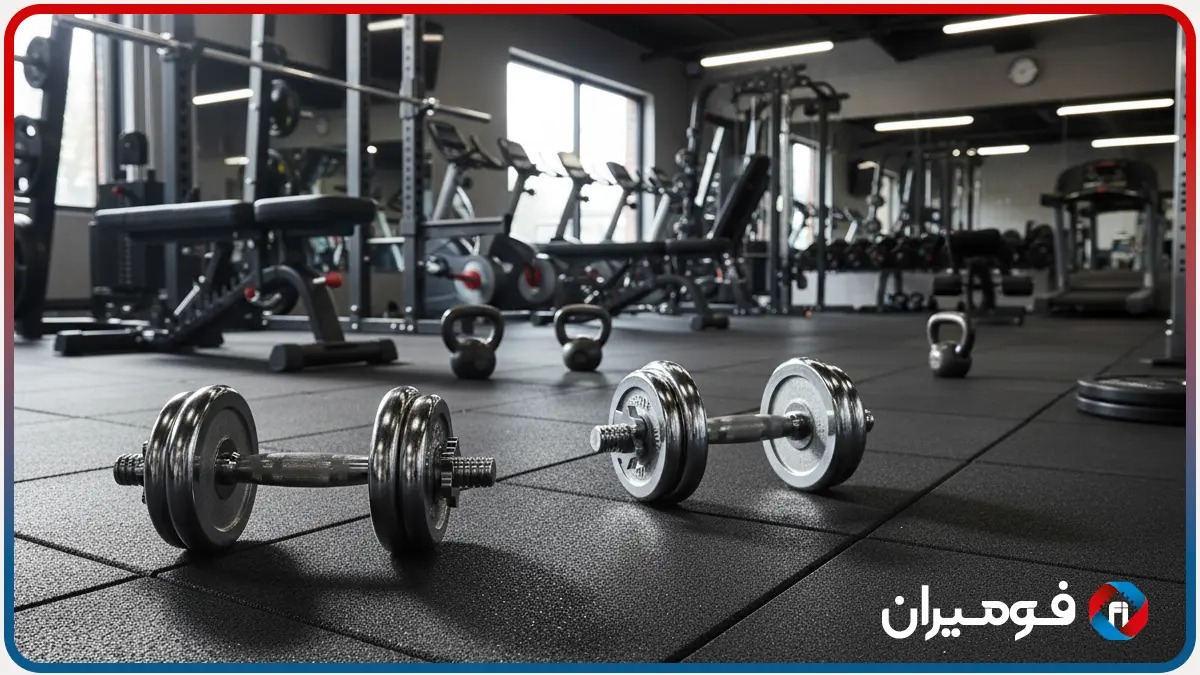
Gym rubber flooring with excellent shock absorption and anti-slip surface is the best choice for equipping weightlifting, CrossFit, cardio zones, and walkways. This granular gym rubber flooring, produced with a compact and dense structure from standard rubber granules, offers very high abrasion resistance and durability in various thicknesses from 10 to 45 mm. Washability, moisture resistance, and the ability to withstand several hundred kilograms of pressure are key features of this product, making it ideal for use in professional and home gyms.

Why is Gym Rubber Flooring Necessary?

In gym design, choosing the right floor is not just an aesthetic decision; it is a safety necessity and a long-term investment. Gym rubber flooring, with a compact granular structure made from standard recycled tires and resistant resins, provides **shock absorption**, **dimensional stability**, and **controlled friction** so that neither the equipment nor the gym floor gets damaged, and athletes have a stable and low-risk workout. If you use Foamiran granular flooring alongside this rubber flooring, with a variety of customized thicknesses and dimensions, the coverage of all your gym zones will be more precise.

What is Gym Rubber Flooring (Granular) and How is it Made?

Gym rubber flooring, or granular flooring, is produced from rubber granules (generally from standard recycled tires) along with a resin binder under pressure and heat. The result is seamless sheets with high shock absorption, suitable abrasion resistance, and sufficient friction. These gym rubber floorings are produced in dimensions of 100×100 cm or 50×50 cm and thicknesses of 10 to 45 mm (and even more in special projects) and are selected depending on the needs of each section of the gym.

Key Benefits of Gym Rubber Flooring

  • Shock-proof and stable: Gym rubber flooring reduces energy transfer to the floor and equipment; suitable for dropping weights.
  • Controlled anti-slip: Standard surface friction for dynamic and explosive movements in gym rubber flooring.
  • High abrasion durability: Resistance against the movement of equipment wheels, dumbbells, and sleds.
  • Easy maintenance: Washable with water and conventional detergents; low stain absorption.
  • Sound and vibration absorption: Reduces noise from dropping weights and vibrations to lower floors.
  • Modular installation: Puzzle/tile pieces for quick installation and easy replacement.
  • Diverse options: Various dimensions, colors, and thicknesses for professional zoning.

information icon

7 Important Facts About Rubber (Granular) Flooring in the Gym

  • 20 mm thickness is the common standard in gyms; each 1×1 meter tile weighs about 20 kg and is ideal under machines and heavy weights.
  • For the weightlifting section, a thickness of 15 to 20 mm optimizes shock absorption and prevents damage to the floor.
  • 1000x1000x20 mm tiles provide support for several hundred kilograms of pressure from strength machines without deformation.
  • In CrossFit gyms, a thickness of 20 to 25 mm guarantees durability against abrasion caused by equipment movement.
  • Granular flooring can absorb up to about 95% of impact energy; a vital feature for dropping heavy weights and barbells.
  • 50×50 cm tiles with a thickness of 10 to 45 mm have high weight and are very suitable for installation under fixed machines.
  • In professional zones, a thickness of 25 to 40 mm creates the highest resistance against pressure and impact and increases the flooring’s lifespan.

Types of Rubber (Granular) Flooring and Their Applications

Based on technical needs and budget, you can choose from the following options. To view technical details and receive consultation, visit the Foamiran granular flooring page.

  • 1×1 Meter Tile (Flat/Checkered): Gym standard; quick installation, easy replacement.
  • 50×50 cm Tile: Weight control of each piece, high maneuverability in small spaces and around columns.
  • Egg-crate (Pedestal Base): Better drainage and higher shock absorption; suitable for open spaces.
  • Roll: Seamless coverage for walkways and cardio areas; thickness 5 to 25 mm.
Gym Flooring and Foam Equipment Buying Guide

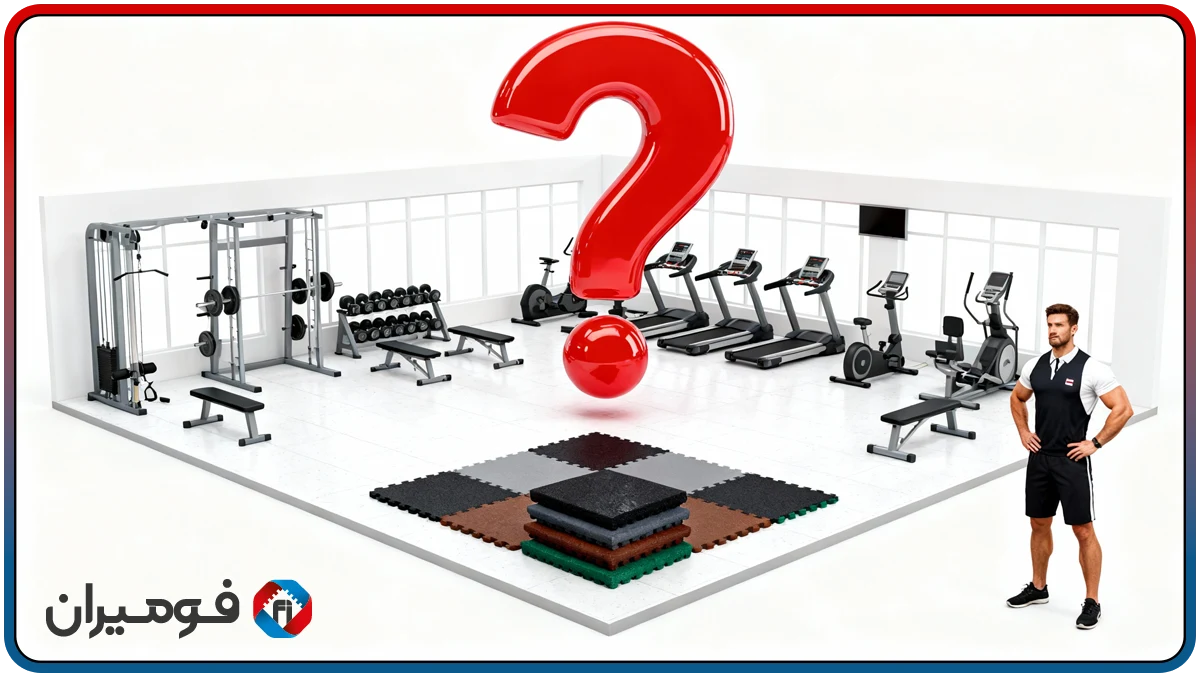
What Flooring Thickness is Suitable for Each Gym Section?
Gym Section Recommended Thickness Key Feature Description
Weightlifting/Dumbbells 15–20 mm Shock absorption + Floor protection Common standard; floor is not damaged and vibration is reduced.
Professional Weightlifting Zone 25–40 mm Maximum shock absorption For dropping heavy weights and explosive exercises.
CrossFit 20–25 mm High abrasion durability Resistance against dragging sleds/equipment.
Cardio/Walkways 10–15 mm Comfort and safety of the corridor Lighter, quick installation, and economical.
Under Fixed Machines 20 mm Withstands several hundred kilograms of pressure Without long-term deformation.

Gym Rubber Flooring; Safe and Durable

Installation and Maintenance of Gym Rubber Flooring

  • Surface Preparation: Surface must be dry, flat, and free of grease/dust; if uneven, perform subflooring.
  • Laying Tiles: Dry lay first; then start from one wall and proceed towards the opposite side.
  • Fixing: Depending on the project, use a surrounding frame, spot/surface adhesive, or mechanical fastening.
  • Sealing and Cuts: Precise cutting around columns/cable trays; bring seams close to reduce liquid penetration.
  • Washing: Mop or gentle water jet + conventional detergent; do not use strong acids/solvents.
  • Periodic Inspection: Rotate high-traffic tiles to increase the useful life of the set.

“Our goal at Foamiran is to upgrade the safety level and durability of the country’s sports halls by providing standard rubber and granular flooring. From selecting thickness to installation, we stay by the customer’s side.”
— Valiollah Jahangiri, CEO of Foamiran

Why Foamiran Rubber Flooring?

Foamiran rubber floorings are produced using standard granules, uniform pressing, and step-by-step quality control to fully guarantee durability, adhesion, and surface uniformity. These products are offered in various dimensions including 50×50 cm and 1×1 m tiles and thicknesses of 5 to 45 mm, and a roll option is also available for seamless coverage of sports halls. Foamiran’s consulting team suggests the most suitable thickness and flooring model by examining the type of exercise, budget, and execution plan of each gym. In addition, easy installation, after-sales service, supply of spare parts, and the possibility of custom production have made Foamiran the first choice for managers of professional gyms.

Foamiran products, including rubber floorings, are under the international quality management system and hold valid certificates ISO 9001 (Quality Management), ISO 14001 (Environmental Management), and ISO 45001 (Occupational Health and Safety). These standards guarantee that every stage from production to final control is carried out with the highest precision and quality. To standardize your gym, increase safety, and protect the hall floor, proceed to purchase Foamiran rubber flooring directly from the factory right now and be assured of the product’s durability and authenticity.

❓Frequently Asked Questions

What is the difference between “Rubber Flooring” and “Granular Flooring”?
In the market, these two terms usually refer to the same product. Granular refers to the manufacturing method and texture, and rubber refers to the material. Both are suitable for gyms and are offered in various thicknesses at Foamiran.
What thickness is suitable for the weightlifting area?
For most gyms, 15–20 mm is standard; for professional zones and dropping heavy weights, 25–40 mm is recommended.
Is rubber flooring waterproof and washable?
Yes, its surface is resistant to moisture and can be cleaned with water and conventional detergent. Do not use strong acids and solvents.
Does gym flooring reduce noise?
Yes, the granular structure absorbs part of the noise from dropping weights and vibrations, reducing sound transmission.
Is tile better or roll?
For weightlifting and CrossFit, 1×1 or 50×50 tiles are more suitable due to easy replacement; for walkways and cardio, roll provides seamless coverage.

survey icon

“To choose the appropriate thickness for each zone, receive a price list and sample,
fill out the contact and technical consultation form right now
Elastic Foam; Advanced Generation of EVA Foams
Choosing the Right Shoe Insole: A Complete Guide

Related Posts

Leave a Reply

Your email address will not be published. Required fields are marked *

Fill out this field
Fill out this field
Please enter a valid email address.