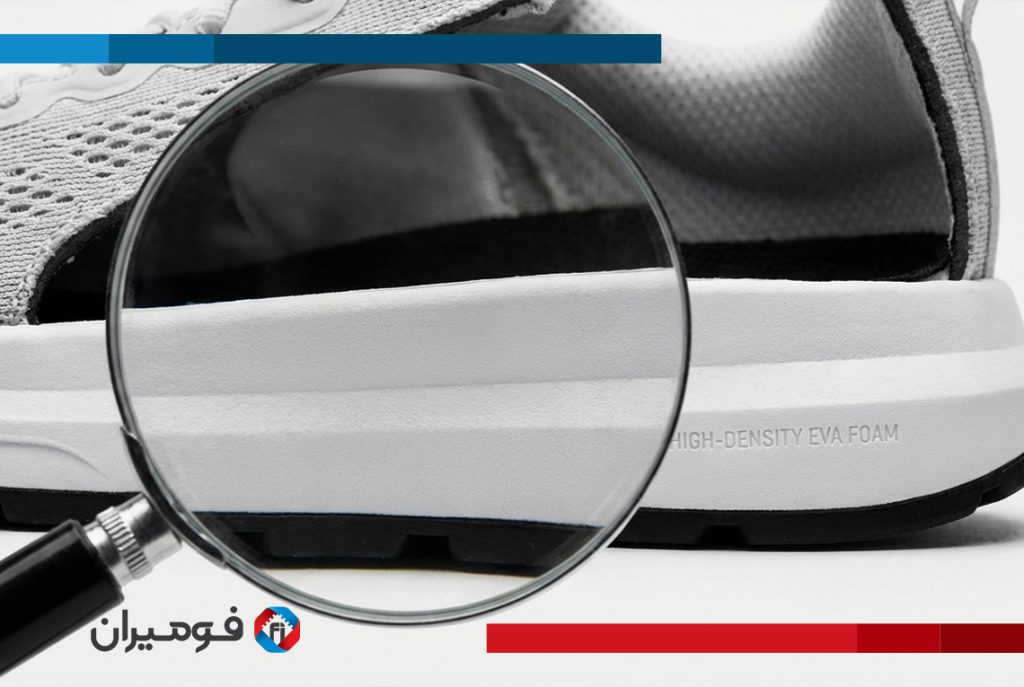
A suitable shoe insole with excellent shock absorption and ergonomic surface is the best choice for arch support, reducing pressure on joints, and increasing comfort in daily and sports activities. These foam insoles with a dense structure are produced from standard EVA or Polyurethane materials and in various thicknesses of 3 to 15 mm, having high abrasion resistance and durability. Breathability, moisture resistance, and weight tolerance up to 150 kg are key features of this product, making it ideal for use in sports, work, and casual shoes.
Why is Choosing the Right Shoe Insole Essential?
In today’s active world, choosing the right shoe insole is not just a comfort decision, but a medical and functional necessity for maintaining foot, knee, and back health. A suitable insole with an ergonomic foam structure made of standard recycled EVA materials and supportive layers provides shock absorption, arch support, and balanced weight distribution to both upgrade ordinary shoes and relieve users from chronic pains like plantar fasciitis or lumbar disc pressure. If you use Foamiran foam insoles alongside this product, with a variety of models and custom sizes, precise support for your foot structure will be guaranteed. These insoles not only increase shoe life but also improve sports performance by reducing vibrations and preventing injuries caused by running or prolonged standing. In fact, orthopedic specialists recommend that you check and replace shoe insoles at least every six months to maintain the body’s biomechanical balance.
What is a Shoe Insole and How is it Made?
A shoe insole, or inner sole, is the internal layer of the shoe that directly contacts the sole of the foot and is produced from foam materials like EVA (Ethylene Vinyl Acetate) or Polyurethane, along with gel or memory foam layers under foaming and heat press processes. The result is flexible insoles with high arch support, appropriate shock absorption, and an anti-slip surface. These insoles are produced in standard dimensions (from size 35 to 45) and thicknesses of 3 to 15 mm (and even custom for specific foot problems) and are selected depending on the type of activity, from daily to sports models. The manufacturing process involves mixing foam granules with non-toxic adhesives, heating in ergonomic molds, and controlled cooling to preserve durability and breathability. Foamiran, using advanced technologies, produces insoles that absorb up to 90% of impact energy and bring the weight of each pair to less than 100 grams.
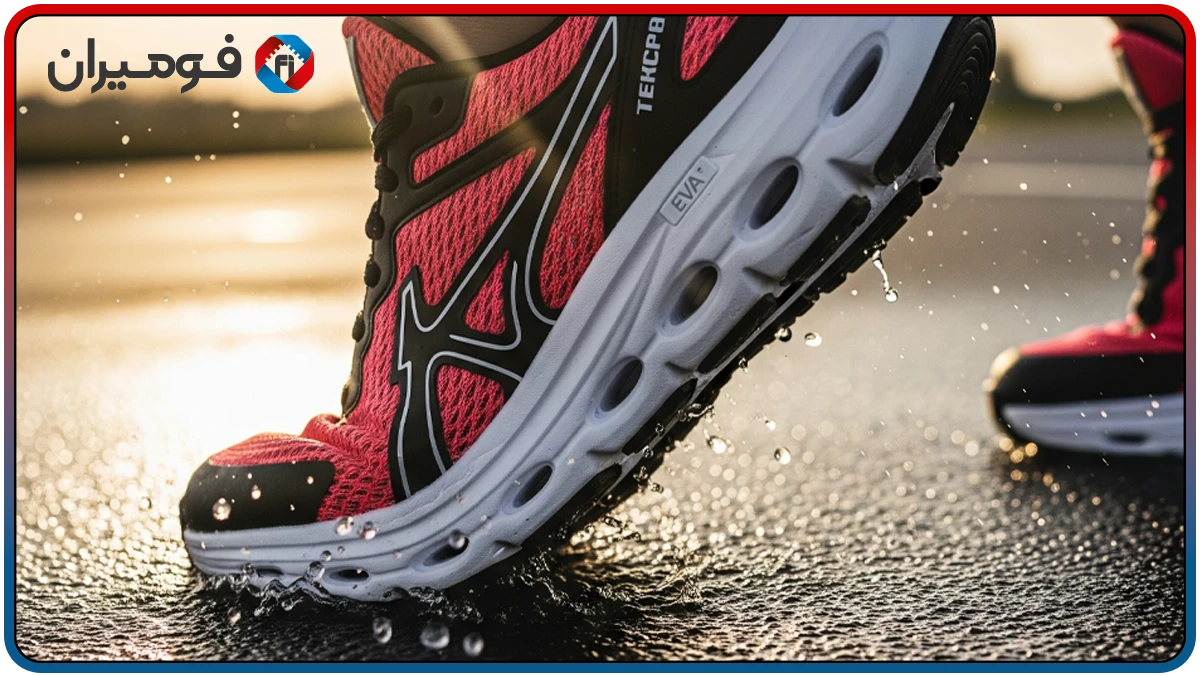
Key Benefits of a Suitable Shoe Insole
- Arch Support: Reducing pressure on the Achilles tendon and preventing flat feet.
- Excellent Shock Absorption: Protecting knee and hip joints while running or jumping.
- Balanced Weight Distribution: Reducing fatigue during prolonged standing or active jobs.
- Breathability and Anti-Odor: Antimicrobial materials to prevent fungal infections.
- High Abrasion Durability: Resistance to perspiration and daily pressure for up to 12 months of use.
- Adjustable: Thermoplastic models for personalized shaping.
- Lightweight and Thin: Increasing comfort without changing shoe volume.

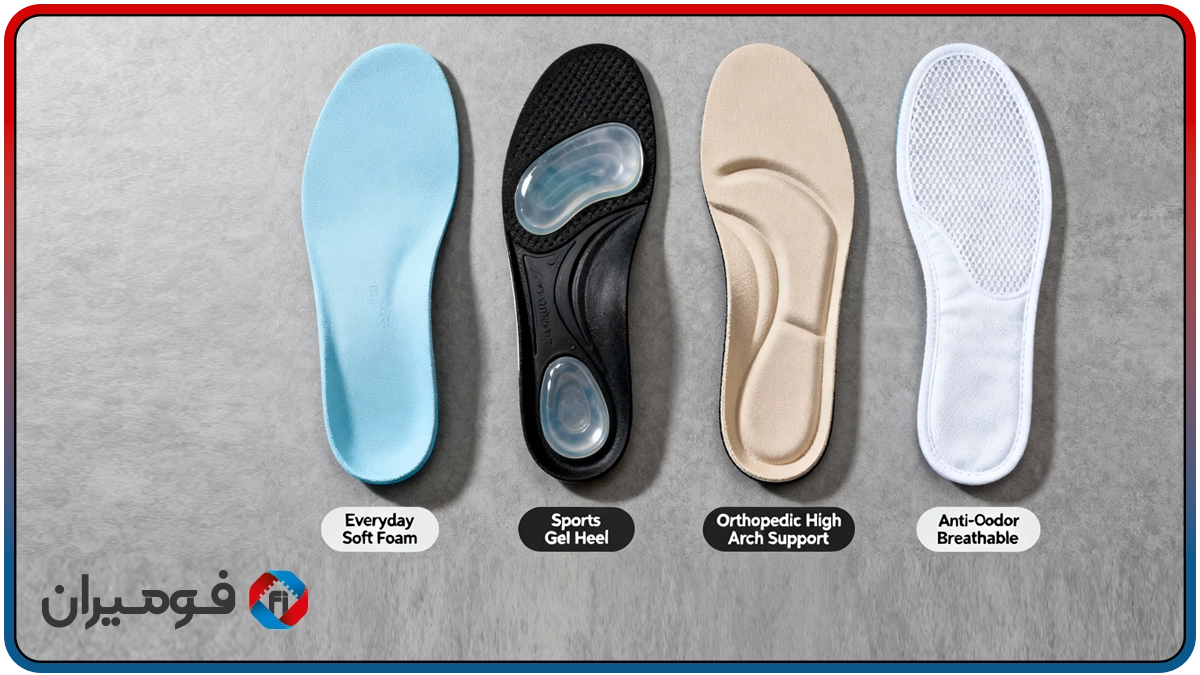
Types of Shoe Insoles and Their Uses
Based on foot type, activity, and health issues, you can choose from the following options. To view technical details and receive consultation, visit the Foamiran foam insole page.
- Everyday Insole (Soft and Flexible): Suitable for walking and work; moisture absorption and basic support.
- Sports Insole (With Heel Gel): For running and gym; vibration reduction and increased speed.
- Orthopedic Insole (High Arch Support): For flat feet or back pain; heat moldable.
- Anti-Odor and Breathable Insole: For high-perspiration jobs; antimicrobial materials with mesh layer.
What Insole Thickness is Suitable for Each Activity?
How to Select and Maintain a Suitable Shoe Insole
- Foot Assessment: Check arch type (high, medium, flat) with the wet test; for flat feet, choose a supportive insole.
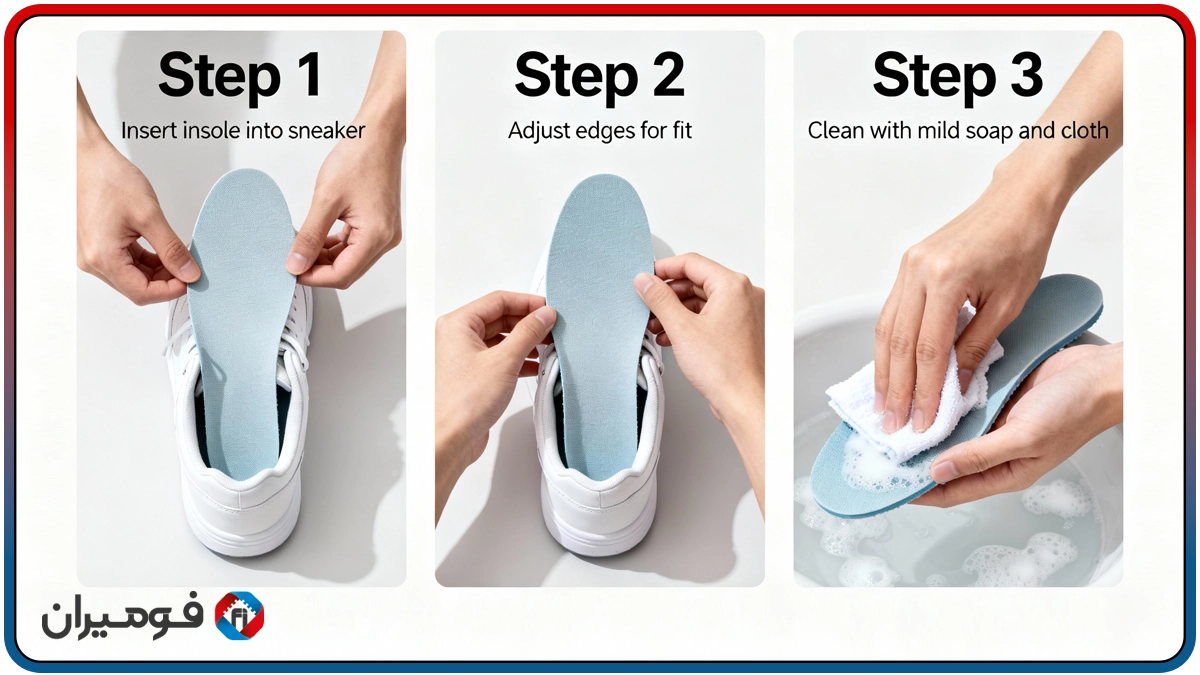
- Matching with Shoe: Test the insole in the shoe; it shouldn’t be overly compressed or create empty space.
- Material Selection: EVA for durability, Gel for shock absorption; use hypoallergenic materials for sensitive skin.
- Shaping: Heat thermoplastic models in the oven (about 80 degrees) and shape inside the shoe.
- Washing: Wash with cold water and mild soap; dry without direct heat.
- Periodic Replacement: Select a new insole every 6–12 months or upon signs of wear to maintain support.
Foamiran EVA Foam for Producing Standard Foam Shoe Insoles
Shoe insoles produced with Foamiran EVA foam are the result of combining technical knowledge, standard raw materials, and stage-by-stage quality control, designed exclusively for professional shoe insole manufacturers. As the largest producer of EVA foam in the Middle East, Foamiran produces various types of lightweight closed-cell, semi-compressed, and resilient foams in diverse densities and thicknesses (3 to 15 mm) to meet the needs of sports, medical, and everyday insole production lines.
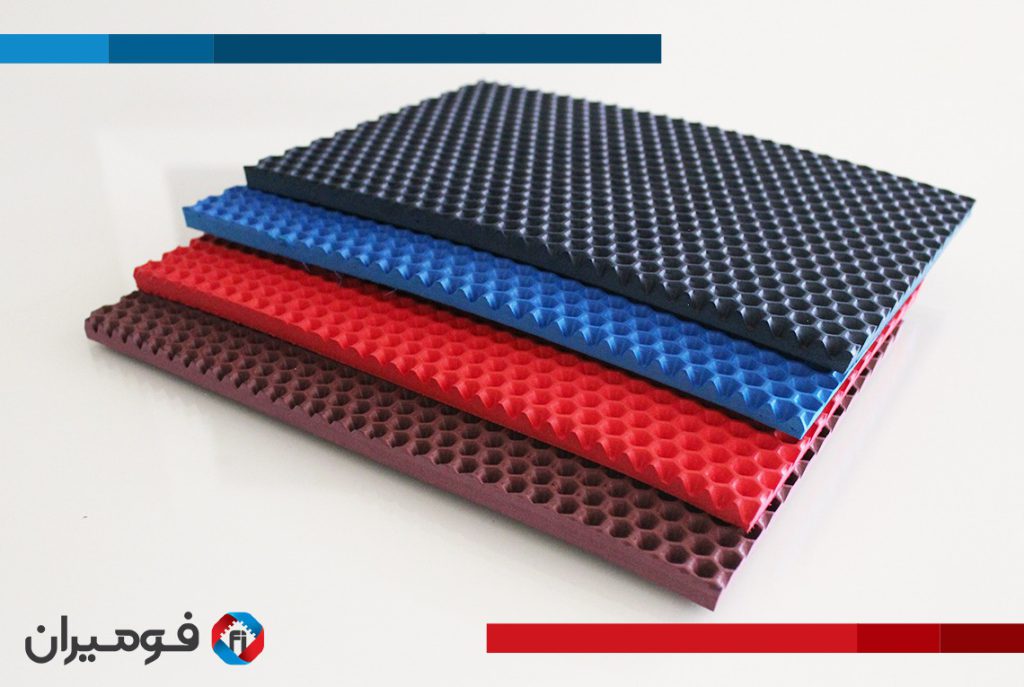
Foamiran EVA Foams are an ideal base for producing foam insoles due to their uniform cell structure, high flexibility, rapid resilience, effective shock absorption, and abrasion resistance. These sheets are capable of CNC cutting, die-cutting, lamination with gel or fabric, and adhesive backing, making them easily usable in shoe and insole production lines.
Foamiran products are manufactured according to international standards ISO 9001 (Quality Management), ISO 14001 (Environmental Management), and ISO 45001 (Occupational Health and Safety) and are made from non-toxic and recyclable materials. This commitment to quality and sustainability has led major shoe manufacturers both domestically and internationally to choose Foamiran EVA foam as the base material for their products.
In addition to supplying ready-made foams, Foamiran also provides the possibility of custom production based on density, hardness (Shore C), color, thickness, and cutting type. To receive technical advice and a test sample, simply contact Foamiran experts so that the best grade of EVA foam suitable for your design and production line needs can be recommended. By choosing Foamiran, you benefit from a reliable supplier with over two decades of experience in the foam industry and cooperation with renowned shoe brands.