In the modern world of construction and interior decoration, the need for materials that simultaneously address multiple needs is felt more than ever. Once, the only concern of builders was the strength of the wall; but today, safety, silence, and beauty are equally important. It is exactly here that products like kindergarten wall covering for children’s safety and acoustic wall covering for adults’ peace of mind enter the field.
The large Foamiran factory, with years of experience in specialized production of various EVA, polyethylene, and EPDM foams, has provided a complete product basket for different industries. From equipping a safe playroom with kindergarten foam wall covering to isolating a sound recording studio with the most advanced sound insulation wall covering, everything is our specialty. But the variety of these products might confuse you. In this comprehensive and specialized article, we intend to review 7 of the most vital foam wall coverings and provide you with a direct buying guide.
Why should we use foam wall coverings?
You might wonder why, despite traditional materials, the use of foam on walls has become a trend? The answer lies in “multi-purpose efficiency”. A plaster wall is hard and rigid and reflects sound. But an engineered foam layer can absorb impact (vital for kindergartens) and trap sound waves (vital for office spaces). When you search for the term kindergarten foam wall covering, it means you are looking for a solution that stone and brick materials cannot handle.
Introduction of 7 types of foam wall coverings (specialized review)
In the following, we will precisely describe these 7 product categories. Our main focus in this list will be on two very high-demand categories, namely child safety products and sound insulation products.
1. Kindergarten wall covering (patterned and safe); the first priority of children’s safety
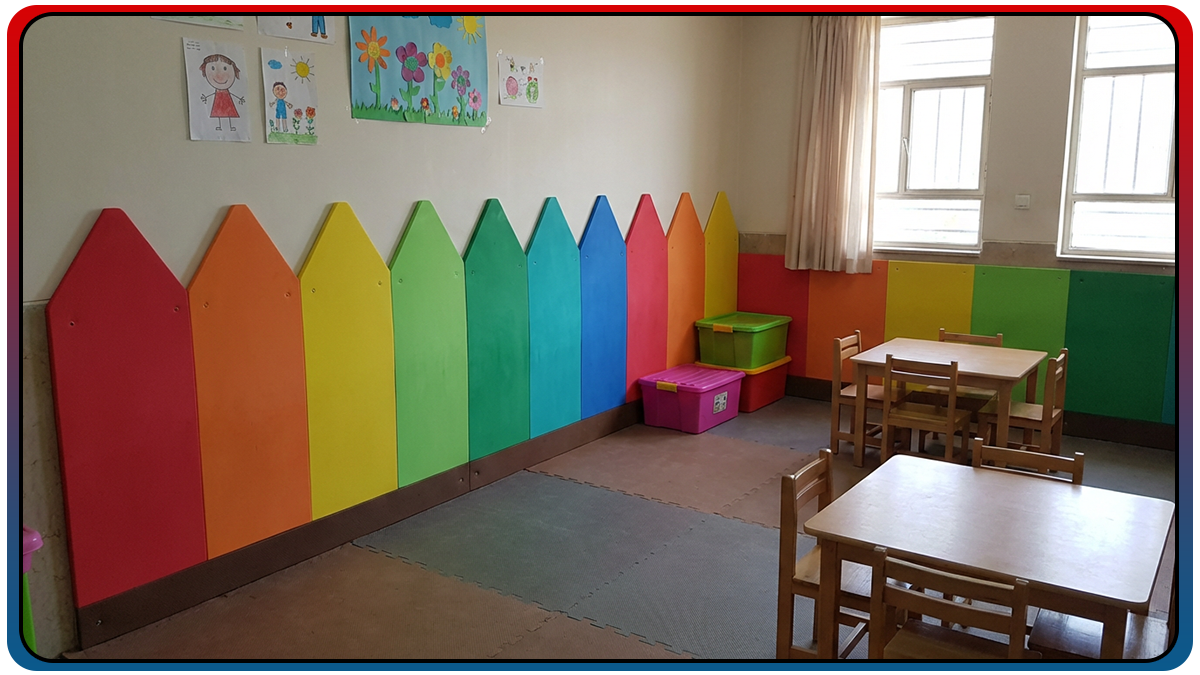
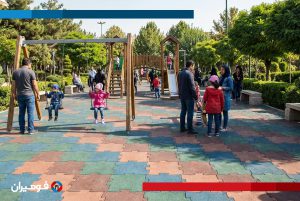
What are the foam wall coverings? Price and buying from the manufacturer” width=”1200″ height=”675″ />Undoubtedly, the most important and sensitive application of foam in interior architecture relates to child care spaces. Kindergarten managers and parents know well that walls are children’s number one enemy during play. The impact of a child’s head or body with a hard wall can be catastrophic. This is where kindergarten wall covering acts as a savior.
Technical and structural features:
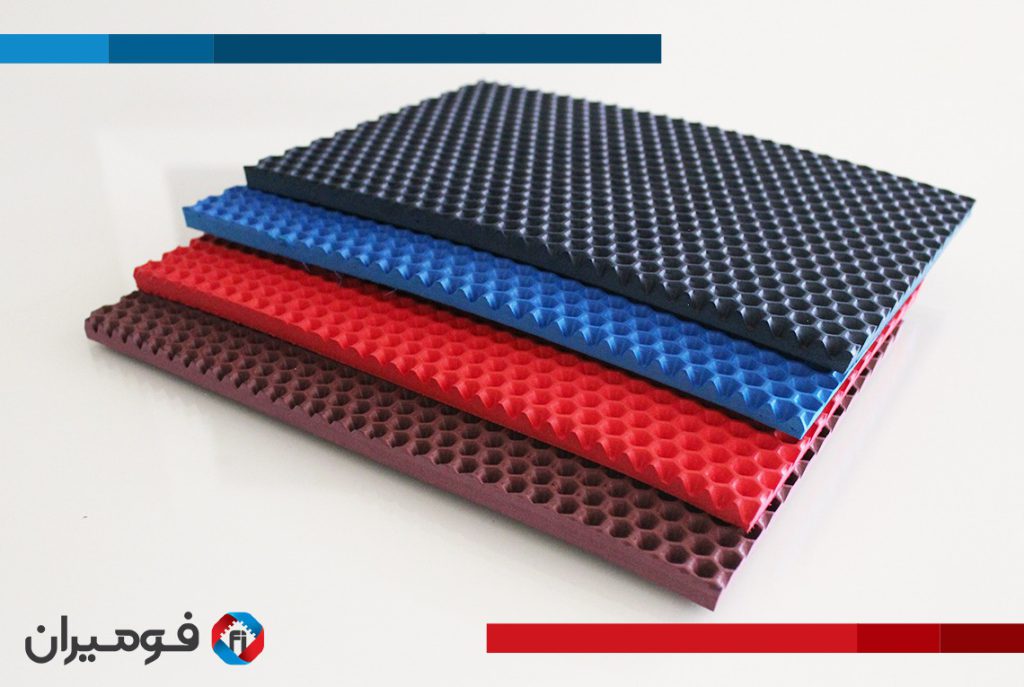
This product is produced at Foamiran from EVA foam (Ethylene Vinyl Acetate) with a special and hygienic formulation. The softness and flexibility of this foam are adjusted to have the highest level of shock absorption. When we talk about kindergarten foam wall covering, we mean a product that has a hygiene certificate and is free of allergenic substances for children’s delicate skin.
Variety of design and color:
In addition to safety, the issue of color psychology is also raised. Foamiran’s kindergarten wall covering is produced in various designs such as jungle, sea, alphabet letters, and geometric shapes. This visual variety makes the educational environment more attractive for the child. Installing these panels is very simple and they are usually supplied in rolls or puzzle forms that cover the entire wall surface up to a standard height (usually 1 meter to 1.5 meters).
2. Acoustic and sound insulation wall covering; the experience of absolute silence

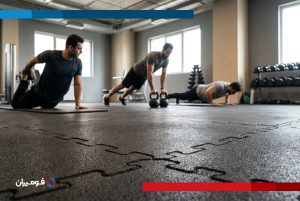
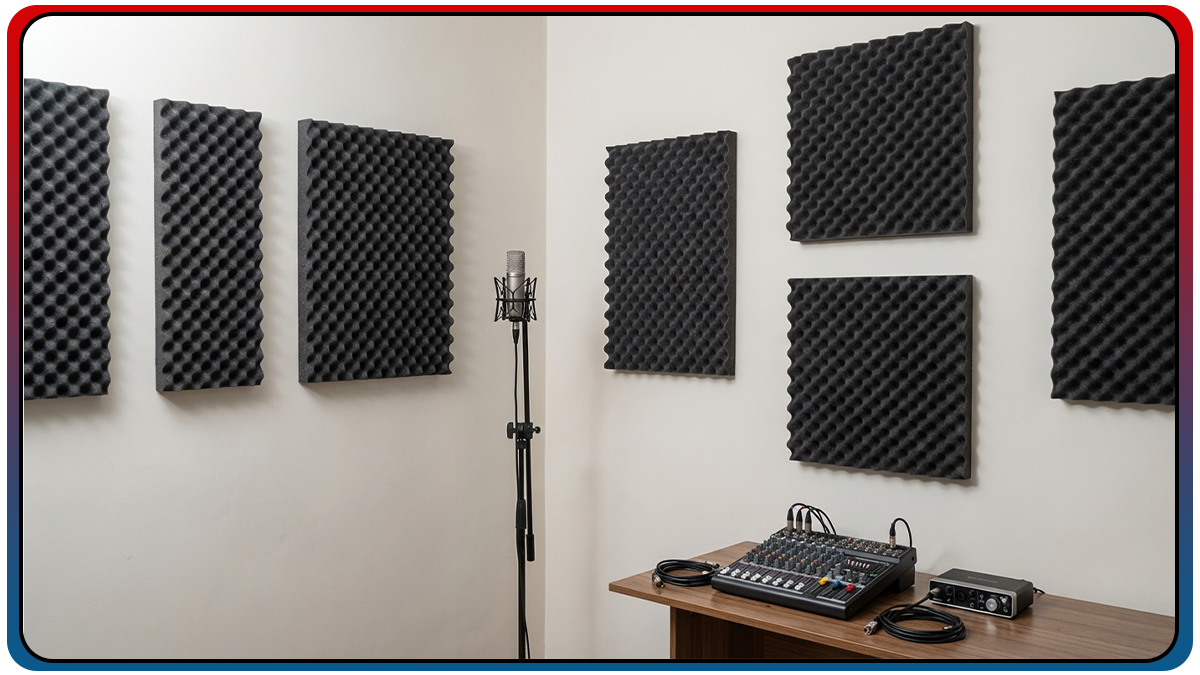
The second giant of the foam world are panels designed to fight noise pollution. Living in crowded cities or working in noisy industrial environments has made the need for sound insulation wall covering inevitable. If you own a home studio, conference hall, cinema, or even a busy office, your solution is using acoustic wall covering.
Mechanism of action of acoustic wall covering:
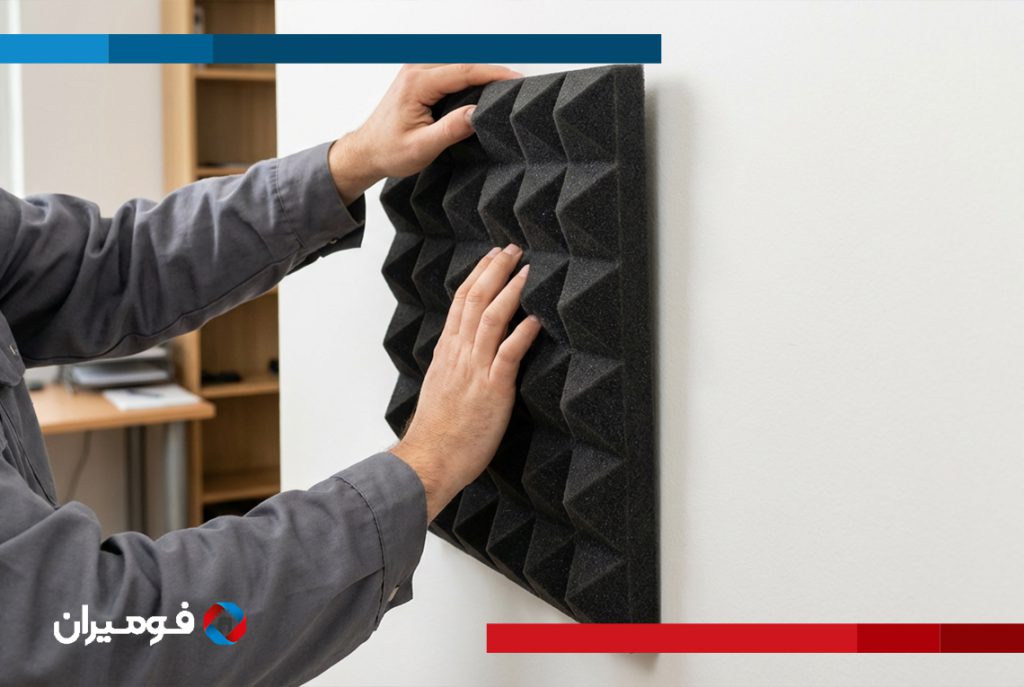
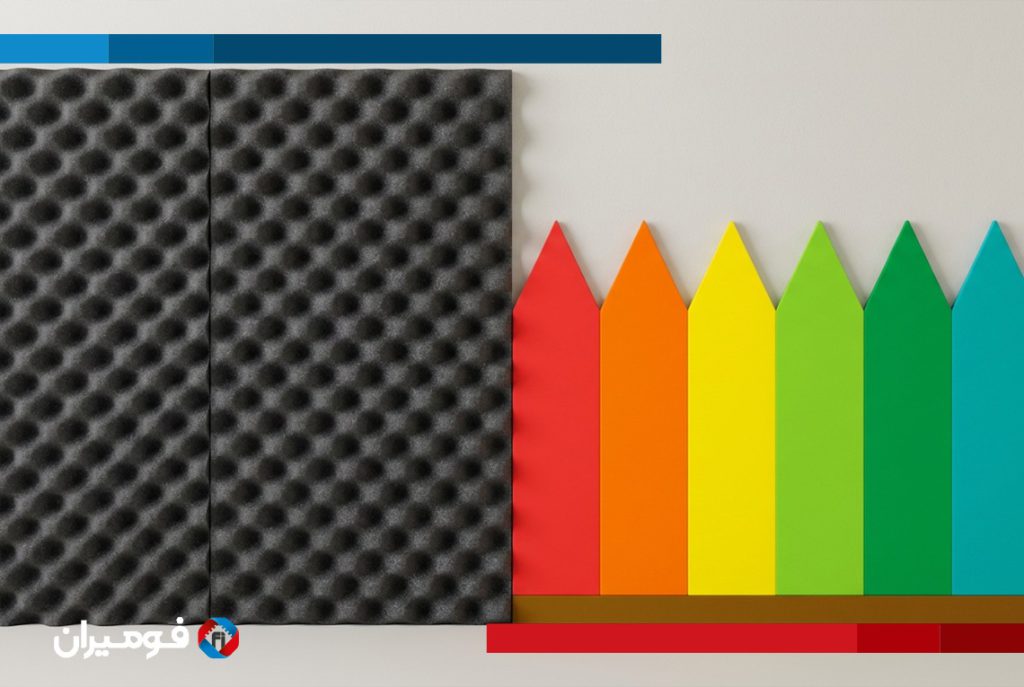
Unlike ordinary foams that have a smooth surface, acoustic wall covering has an open-cell structure and a specific geometric surface (like egg crate, pyramidal, or wave). This structure causes sound waves to get trapped inside the cavities after hitting the foam and lose their energy. As a result, sound return (Reverb) and echo in the environment are eliminated.
Difference between sound insulation and acoustic:
You should note that sometimes the goal is to prevent sound from going out (insulation) and sometimes the goal is to improve sound quality inside the room (acoustics). Foamiran products cover both needs. Using high-density foams as sound insulation wall covering in the substructure of walls prevents sound passage between units, while installing pyramidal panels on the wall increases the auditory quality inside the room.
💡 CEO’s word on commitment to quality:
“In producing products that deal with human health and peace, there is no room for error. When a kindergarten manager installs our kindergarten wall covering hoping for children’s safety, or when a sound engineer trusts Foamiran’s acoustic wall covering for their studio, we feel a heavy burden on our shoulders. The technical team and I at Foamiran are committed to using the highest quality polymers so that the final product has exactly the expected efficiency.”
– Valiollah Jahangiri (Foamiran CEO)
3. Adhesive-backed decorative wall coverings
This category of products is excellent for quickly changing the interior decoration of homes and offices. If you are a tenant or don’t want to pay heavy masonry costs, adhesive-backed foam wall coverings are the best option. These panels usually have a thickness between 6 to 8 mm and simulate designs like brick, marble, and wood. Although their sound absorption power is not as much as a professional acoustic wall covering, they are heat and sound insulators to an acceptable extent.
4. Resistant industrial wall coverings (EPDM and Neoprene)
Outside of residential and educational environments, heavy industries have different needs. In environments where walls are exposed to acid splashes, hot oils, salt water, or direct sunlight (UV), ordinary EVA foams decompose. Foamiran suggests EPDM and Neoprene sheets for these applications. These wall coverings have very high chemical resistance and are used in marine, petrochemical, and automotive industries.
5. Column bumpers (Corner Guards) and parking protectors
You must have seen in multi-story parking lots that the sharp edges of columns are covered with a thick yellow and black foam. These products are also considered a type of foam wall covering that has a very high density. Their main goal is to protect the car body against collision with the hard concrete of the column. These bumpers must be resistant enough not to tear upon impact.
6. Substructure roll foams (Silent Foam)
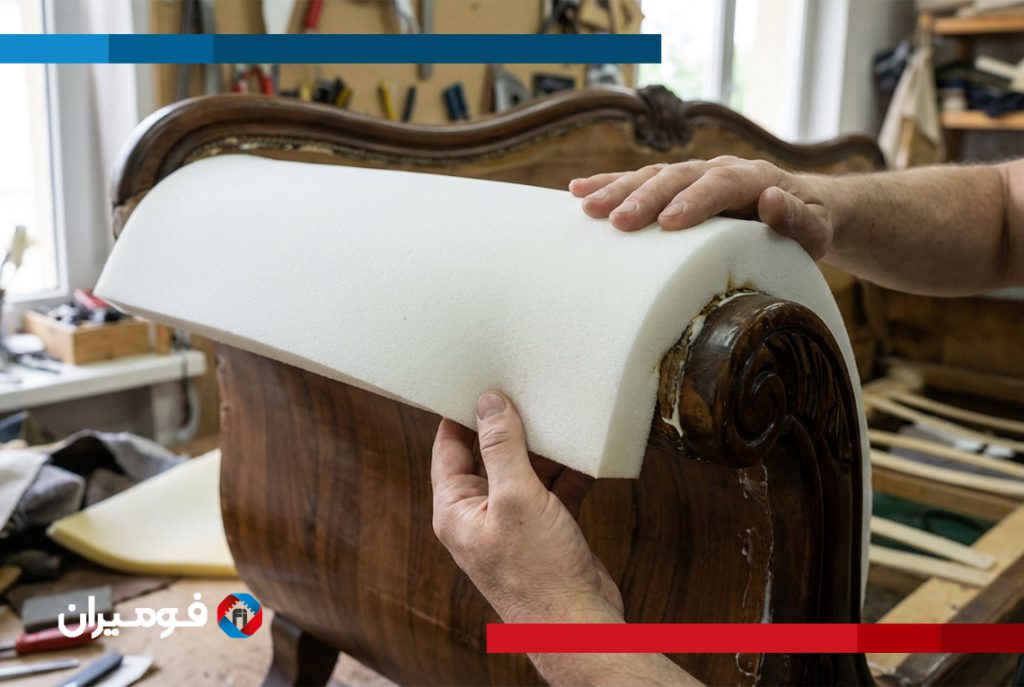
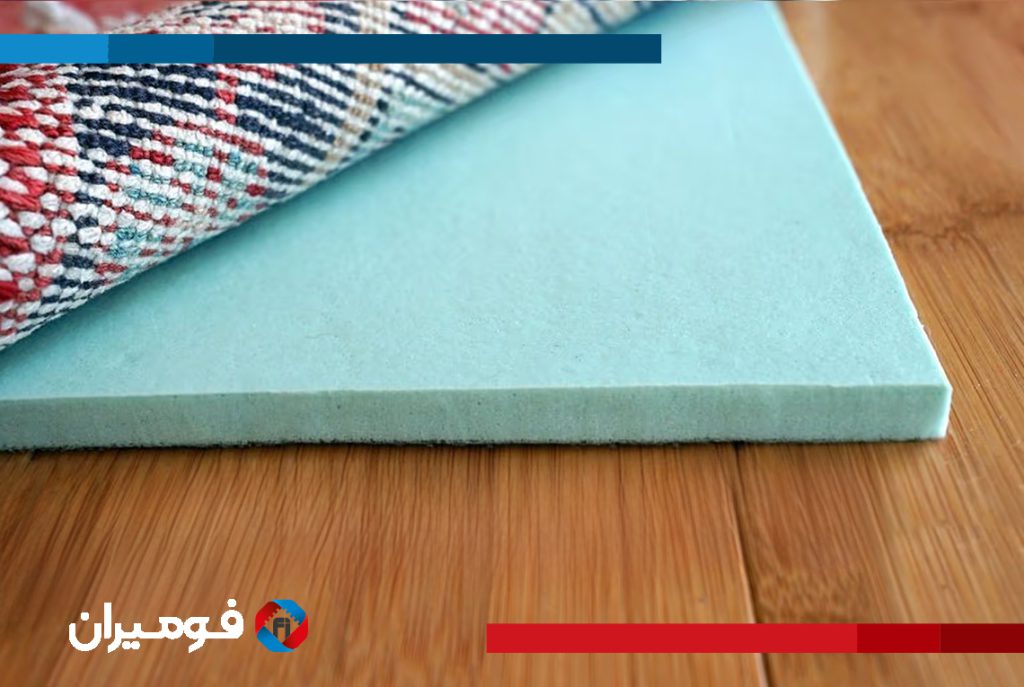
Sometimes the foam wall covering is not seen, but is hidden under the final layer. Before installing wallpaper or wooden wall coverings, using a layer of compressed silent foam can cover the unevenness of the plaster wall. Also, this layer acts as a supplement alongside sound insulation wall covering and prevents wall moisture transfer to the wallpaper.
7. Hospital antibacterial and clean room wall coverings
In medical environments, operating rooms, and laboratories, the existence of seams and cracks on the wall means a place for bacteria accumulation. Foamiran produces compressed foam sheets with special coatings that have a completely polished and non-porous surface. These wall coverings are resistant to strong hospital detergents and do not allow the growth of any fungi and bacteria.
Technical comparison table of foam wall covering types
To make it easier to choose between kindergarten wall covering, acoustic models, and other items, we have compared their key specifications in the table below:
Principled installation guide and maintenance of foam wall coverings
Buying a quality product is only half the journey; the other half is correct installation and proper maintenance. Many times, customers purchase the best kindergarten wall covering, but due to unprincipled installation with unsuitable adhesives, they witness the panels detaching after a while. Or in other cases, they expect a sound insulation wall covering to eliminate all environmental sounds with wrong installation.
Golden tips in installing wall coverings
To install kindergarten foam wall covering and various roll models, the underlying surface must be completely smooth, dry, and dust-free. If your plaster wall has dampness, be sure to eliminate the moisture source first. The best glue for sticking these foams on plaster and cement surfaces is special industrial glue (known as iron glue or 8888), which has high adhesive strength.
Regarding acoustic wall covering, the issue is a bit more sensitive. In studios, you should not cover the entire wall surface with foam, but you must identify sound reflection points. Also, sealing the seams between sound insulation wall covering panels is very vital; even a millimeter gap can allow sound passage and reduce insulation efficiency by up to 50 percent.
Cleaning and washing method
One of the main concerns of play center managers is environmental hygiene. Fortunately, the kindergarten wall covering produced at Foamiran has a closed-cell structure and is waterproof. This means liquids do not penetrate the foam texture. To clean kindergarten foam wall covering, it is sufficient to use a damp cloth and mild detergents (non-acidic). However, note that acoustic foams are usually sponge-like and should not be washed directly with water; for these cases, using a vacuum cleaner or dry dusting is recommended.
Buy Acoustic Wall Covering
Retail and wholesale purchase of various acoustic foam wall coverings at the best price